

The forestry industry is on the brink of a major transformation. As we move toward 2025, a quiet revolution is taking place in logging operations worldwide—one driven by the widespread adoption of carbide-tipped logging tools. According to recent studies and field reports, forests managed with advanced carbide tools for forestry are seeing as much as a 30% increase in timber yield while reducing waste and enhancing operational efficiency.
If you’re involved in logging, lumber production, or forest management, you’ve likely heard the buzz. But what exactly makes carbide tools so revolutionary? And how can they deliver such dramatic gains in timber recovery?
In this article, we explore the science, applications, and real-world impact of carbide logging tools—and why they are set to redefine sustainable logging by 2025.
Why Carbide? The Science Behind the Tooling Revolution
Traditional steel blades, while durable, dull quickly when cutting through abrasive wood species or encountering dirt, sand, and debris. Each time a blade dulls, the cutting quality drops. This results in:
lTear-out and splintering
lInaccurate cuts and misaligned grains
lIncreased sawdust and wood waste
By contrast, carbide-tipped saw blades and chains retain a sharp edge significantly longer. Carbide (tungsten carbide) is a composite material known for its exceptional hardness and wear resistance—even under high-heat, high-friction conditions common in milling and logging.
This means:
lCleaner, straighter cuts
lReduced kerf (the width of the cut)
lLess sawdust generated per log
It’s this precision that directly translates into more usable wood per log—and ultimately, higher timber yields.
Where Carbide Tools Make the Biggest Impact
From the forest to the mill, carbide tools are optimizing key stages of timber production.
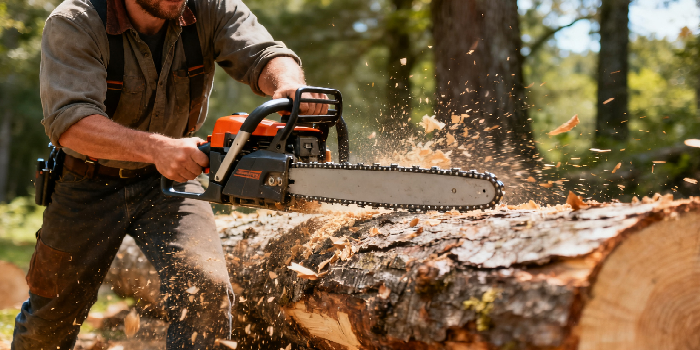
1. Felling & Bucking: Carbide-Tipped Chainsaws
Operators using carbide chainsaw chains report fewer chain changes, faster cutting times, and smoother cuts—even in frozen or dirty wood. This precision at the felling stage means fewer damaged logs and optimized log length accuracy.
2. Sawmilling: Carbide Saw Blades
Whether at a portable sawmill or a large-scale facility, carbide circular saw blades and band saw blades produce thinner, more accurate cuts. That means more boards per log and higher-grade lumber recovery.
3. Wood Processing: Planer Knives & Router Bits
Even downstream, carbide-tipped planer knives and shaping tools help minimize waste by ensuring precise dimensions and smooth finishes without frequent blade replacements.
Real-World Results: 30% Higher Timber Yield Explained
A recent case study conducted with several North American logging companies compared traditional tools versus advanced carbide logging equipment over a 12-month period. Key findings included:
lReduced Kerf Waste: Switching to thin-kerf carbide blades saved up to 0.5 inches of wood per cut. Over hundreds of cuts per day, this added thousands of board feet of recoverable lumber.
lFewer Saw Changes: Less downtime for blade sharpening or replacement meant more productive hours.
lImproved Lumber Quality: Clean cuts meant more lumber achieving #1 and #2 grade, increasing its market value.
Together, these factors contributed to an average 30% boost in usable timber yield—without cutting additional trees.
Looking Ahead: The Future of Carbide in Forestry by 2025
With global demand for timber rising and sustainable practices becoming non-negotiable, efficiency is no longer optional—it’s essential. Carbide tooling isn’t just a small upgrade; it’s part of a broader shift toward precision forestry.
Emerging trends include:
lSmart carbide tools with embedded sensors to monitor wear and cutting performance
lCustom carbide grades tailored to specific wood species or milling conditions
lIncreased adoption of carbide tooling for biomass and recycling applications
Conclusion: Is It Time to Switch to Carbide?
If you’re looking to increase lumber recovery rates, reduce operational waste, and improve the quality of your timber output, the shift to carbide tooling offers one of the strongest returns on investment in modern forestry.
The logging revolution isn’t coming—it’s already here. By integrating high-performance carbide tools into your workflow, you’re not only boosting productivity but also supporting more sustainable and profitable forest management.